
The West's looming shadow war

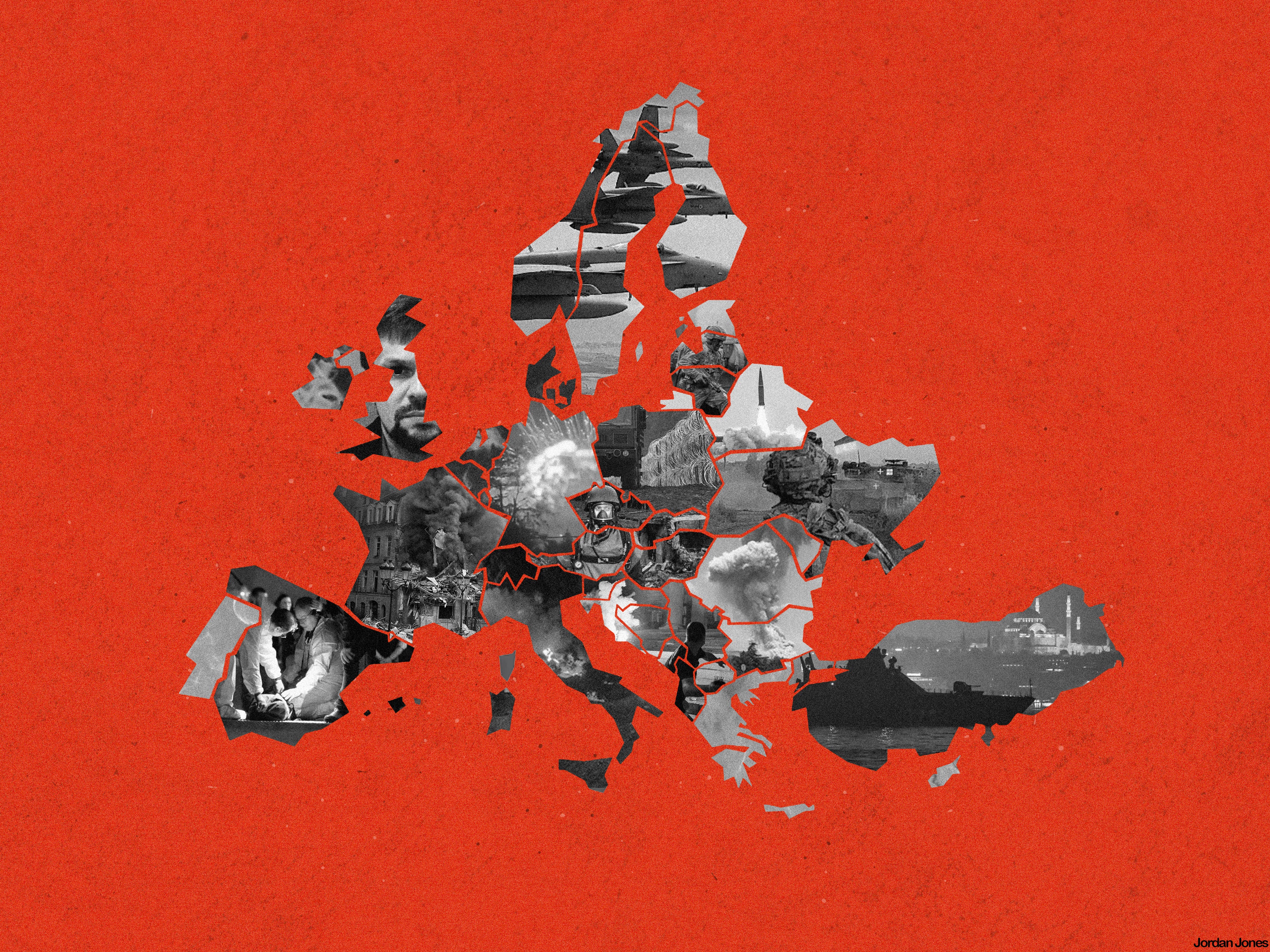
One shell, FPV-drone, and human life at a time the bounds of a new Iron Curtain have steadily edged westwards through Ukraine, with the eyes of the world upon it.
But far beyond the fiercely contested front, a deadly war in the shadows has left wrong-footed Western Intelligence services scrambling to respond.
The Director of MI5 said Russia’s Main Directorate for Military Intelligence (GRU) is now carrying out a “sustained mission to generate mayhem on British and European streets”.
Britain’s leading role in supporting Ukraine since Russia’s full-scale invasion, Ken McCallum added, means “we loom large in the fevered imagination of Putin’s regime, and we should expect to see continued acts of aggression here at home”.
Spearheaded by a secretive unit within the GRU known as ‘Unit 29155’, operations have included bombings, assassinations and an ever-more widespread and sophisticated campaign of sabotage.
The latest attacks, which have often centred on military aid supply-lines into Western Ukraine, are more than an afterthought to Russia’s Ukraine adventurism.
The new mature phase of the GRU’s post-Soviet redevelopment has become an integral asymmetric tool in a wider, decades-long bid to reassert Russian power within it’s beleaguered ‘sphere of influence’.
Following the infamous ‘private military company’ Wagner’s abortive Russian coup attempt in the summer of 2023 – led by long-time Putin confidant Yevgeny Prigozhin and GRU veteran Dmitry Utkin – speculation mounted that the Kremlin was weakening over a year into the quagmire it had created for itself on the edge of the Donbas.
But with Wagner’s apparent defeat -and Prigozhin and Utkin’s elimination as rivals- the GRU has wrested control of an operational empire that the military-intelligence directorate had in fact founded itself almost a decade prior, in the midst of a sweeping new offensive campaign.
— In 2008 the first European war of the 21st century broke out.
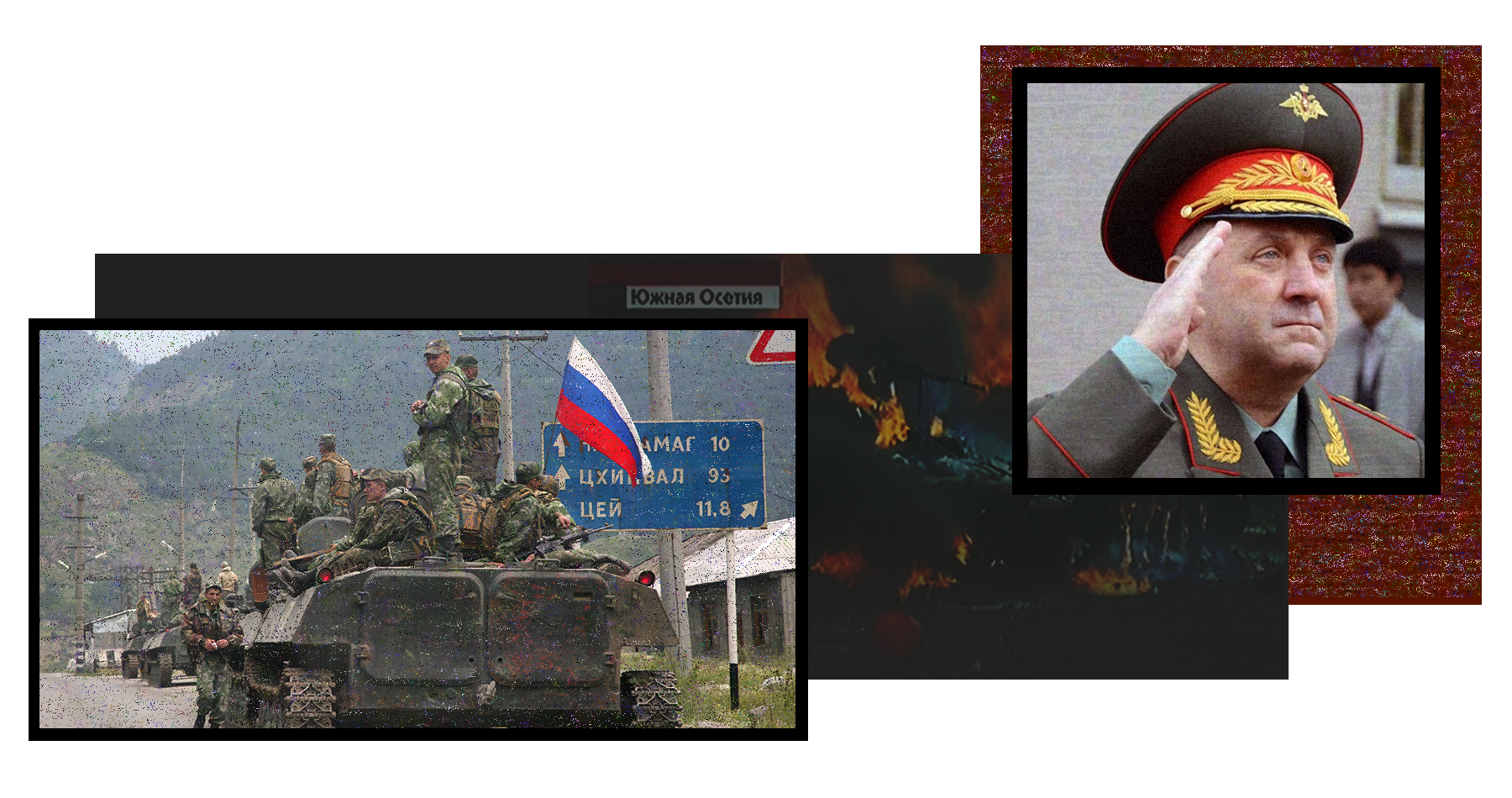
In an early echo of the war in Ukraine, Russia’s Soviet-vintage army crashed into Georgia, 17 years after it had gained independence. In a 16-day campaign Russian forces maimed the burgeoning nation, seizing the breakaway regions of Abkhazia and South Ossetia and checking Georgian ambitions to join Western institutions like the EU.
In pursuit of restoring regional hegemony the Kremlin’s objectives had been met, but its armed forces were assessed to have performed poorly.
Despite it’s central and powerful role today, the GRU, then only recently granted a sprawling new headquarters in the centre of Moscow worth £400bn, entered the firing-line following its perceived failures.
Factional military rivals pushed to carve the Directorate up. In the difficult months which followed the GRU’s long-time leader was unceremoniously replaced. Its ‘Spetsnaz’ division, a kind of Soviet SAS, and a core asset of the organisation, was nominally transferred to the regular Army. This rapid loss of identity seemed to spell the end for the Soviet-legacy GRU as it had been, destined perhaps to continue only as a much reduced Aeroflot-like symbol of lost glory.
The Directorate’s new chief, a General named Igor Sergun, however, proved entirely more capable and politically-savvy than his predecessor. Winning bureaucratic battles inside the Kremlin early, Sergun fought to reverse decisions and retain the GRU’s battle-hardened Spetsnaz unit. Keeping the ear of Putin, still a central task for any competent high-ranking apparatchik, Sergun batted away rival factions and ensured his organisation’s ongoing independence from the rest of the armed forces.
To maintain it’s newly won independence, Sergun immediately set about transforming the GRU into a force that couldn’t be dispensed with so easily. Rather than a conventional military intelligence organisation, the new GRU would be an aggressive, front-footed tool of Russian expansionism. The war in Georgia had laid bare the central problem facing post-Soviet Russia, for the first time in at least a century the successor state to Tsarist and Soviet Empire had become significantly diminished militarily, economically and politically— helping the country to punch and compete above its weight by any means practicable, therefore, was to become the GRU’s new driving mission.
Central to Segun’s new plans was a younger General named Andrei Averyanov. A Spetsnaz veteran of the Afghan and Chechen wars, Averyanov was ordered to construct a new unit within the Directorate. Tasked with aggressive yet ‘deniable’ warfare overseas, known in the business as ‘wet work’ for the bloody nature of it’s operations — it would be named ‘Unit 29155’.
Under Averyanov’s guidance 29155 quickly unleashed a steady stream of operations on European soil.
When popular revolt broke out in Ukraine in 2014, driven by pro-Russian President Yanukovych’s failure to fulfil election promises and begin the process of joining the EU Russia reacted quickly. The Kremlin immediately turned to it’s new deniable force to limit the damage.
In a lightning response much unlike any conventional invasion seen in modern times, GRU operatives spearheaded the seizure of Ukraine’s Crimea and Donbas regions. In it’s wider response, Unit 29155’s leader Averyanov even travelled under cover himself to central Europe where the Unit infiltrated and bombed Czech and Bulgarian ammunition depots. The following year a Bulgarian arms-dealer responsible for supplying Ukraine was targeted in an assassination attempt. Building momentum, the Unit moved on to mount an ambitious but ultimately abortive coup attempt against Montenegro, provisionally planning to seize parliament and kill the country’s president.
The brazen string of attacks soon came to a head. In 2018, in its first major blunder, the GRU was rocked by it’s first major failure. Three of 29155’s operatives travelled to London carrying the highly unstable nerve-agent Novich, and in a now highly-publicised operation, Averyanov’s men attempted to kill GRU defector Sergei Skripal— one of their own now living peacefully in exile in the sleepy English town of Salisbury. The operation ended in failure, killing only an innocent civilian and leaving Skripal himself injured but recovering after becoming critically unwell.
— In the wake of the Salisbury attack, public investigations by the outlets Bellingcat and The Insider were able to unmask the operation’s direct perpetrators, as well as the identities of numerous other clandestine GRU operators. In a stunning case of amateurish tradecraft, the Directorate’s ‘illegals’ had been issued sequential false passport numbers making identifying them a trivial task for investigators. The embarrassing leak meant it had become impossible for the GRU to be certain which agents had been implicated, and so an entire generation of the Directorate’s illegals was ‘burnt’, unable to safely travel on operations again. The experimental Unit 29155 needed years to rebuild.
This should have been the moment that Russia’s increasing hostility stoked serious vigilance within the West, but in the years leading up to its later full-scale invasion of Ukraine in 2022, little action was taken to respond.
While Unit 29155, Sergun’s central project within the renewed GRU, had rapidly flown too close to the sun, another of the GRU’s pet projects was going from strength to strength in the deserts of Syria and North-Africa. ‘Wagner’, an ostensibly “private” military company or PMC, had in reality been set up directly at Putin’s behest. In 2014, in an effort to emulate 29155 on a cheaper and wider scale, the GRU sought to create an organisation with more distance from the Kremlin, and with an even greater ability to evade sanctions and skirt around political restrictions.
Yevgeny Prigozhin had been a long-time confidant of the President since before his ascent to power in Russia. Later coming to be known as ‘Putin’s Chef’, Prigozhin had become enormously wealthy thanks to Putin’s gifting of state-contracts to supply Russian Military rations worth more than a billion dollars.
Regarded as a highly capable businessman, and honed in sanctions evasion and under-the-table dealings typical of the post-soviet upheaval of the 90s, Prigozhin was selected as the GRU’s man. In 2014, as Unit 29155 led Russia’s assault in Crimea and the Donbas, a meeting was setup by the GRU between Prigozhin and a hardened Spetsnaz veteran named Dmitry Utkin. Under Prigozhin’s leadership the two were to form a new PMC to be named “Wagner”, with Utkin in charge of Military operations.
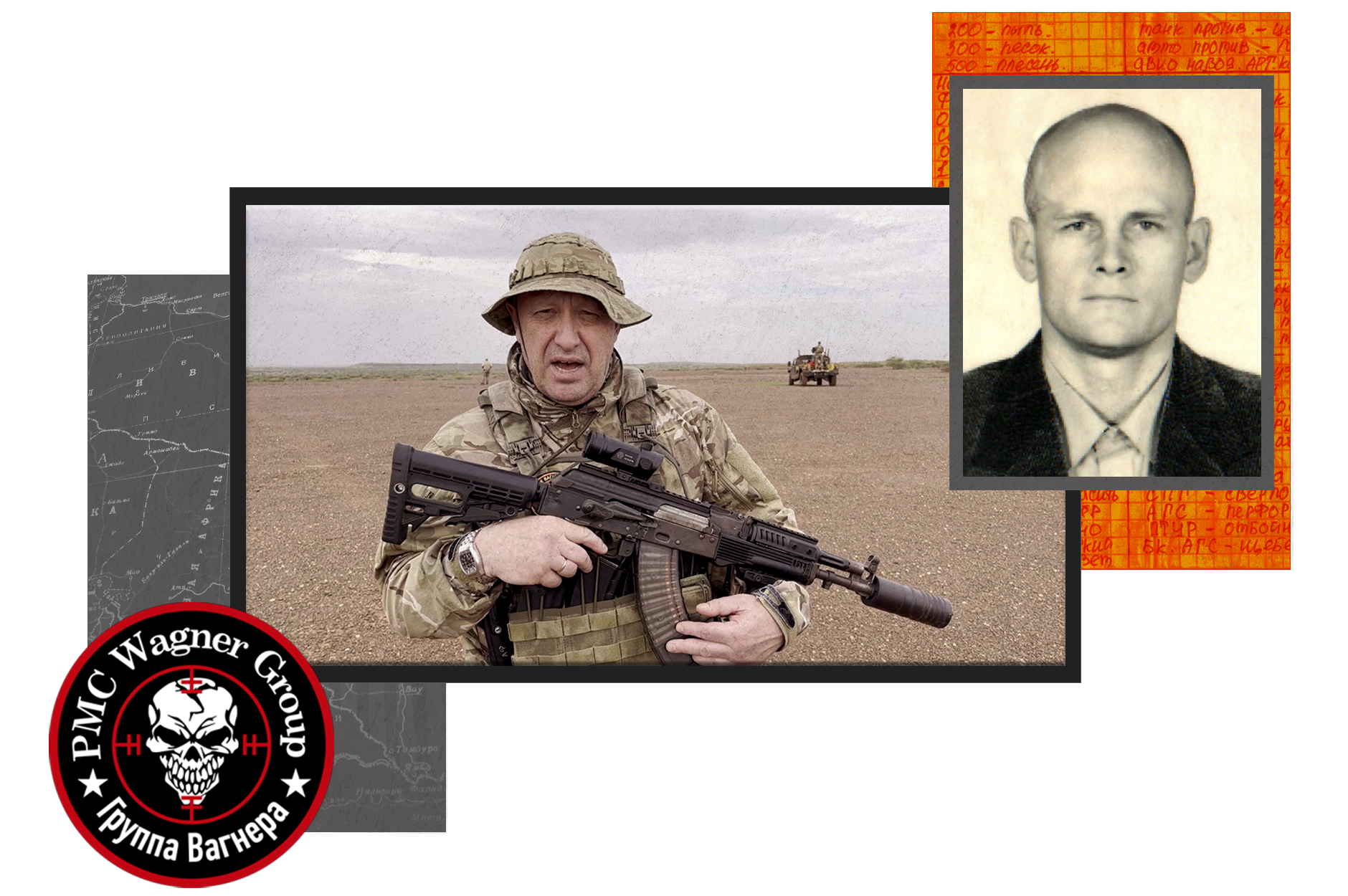
Wagner quickly proved its worth reinforcing Russia’s new bellicose posture much further abroad than Ukraine or Georgia. Outside the former USSR, in Syria, following Russia’s intervention on behalf of the beleaguered Assad, Wagner’s ‘musicians’ as they had come to be known, acted as ground troops directly supplied by the GRU. Utkin himself was granted the ‘Hero of Russia’ medal at this time, the country’s highest military award, for his leadership on the ground in key battles over the desert city of Palmyra. Meanwhile, Prigozhin secured oil and mineral deals with the sanctioned Assad regime, cleverly routing finances and ensuring the Wagner operation remained an incredibly cheap tool in the Kremlin’s arsenal. Driving a thorn in the West’s side, Prigozhin only replicated the group’s successes in much of Africa, ousting the long-standing French presence in many of its own former West-African colonies.
With the West rocked by the coronavirus pandemic and having failed to react to Russia’s aggression across three continents, Putin pressed his new advantage. In 2022, Russia’s military crashed over the Ukrainian border in a full-scale invasion. Four years after the disastrous Salisbury attacks Unit 29155 was once again ready to return to action. Undercover ‘kill-teams’ were deployed ahead of the Army to Kyiv, where they would attempt to assassinate key targets before the anticipated rapid dissolution of the Ukrainian State.
As the world watched the beginnings of a major new war in Europe however, it quickly became clear that Russia had dramatically underestimated Ukrainian resolve, and the Russian military’s strike towards Kyiv was resolutely blunted. The Kremlin accepted it was forced to fight a grinding attritional war in Ukraine, and within weeks Prigozhin’s Wagner was brought in to replicate the efficiency and success it had already won Russia further afield.
Prigozhin rapidly expanded Wagner’s forces, responding to the scale of the new conflict. In large recruitment campaigns which included Wagner posters on billboards inside Moscow, the group offered lucrative contracts for sign-ups and the chance to avoid less glamorous conscription into the military. Prigozhin personally led the recruitment of convicts straight out of Russian prisons, a major bolster in numbers among the group’s more ‘expendable’ troops.
In exchange for the rewards of wealth, status and freedom, Wagner’s troops fought in the hardest sectors of the Russian frontline, driving into the city of Bakhmut and making gains where much of the Russian Army floundered.
— In under a decade, Wagner had become enormously powerful. In Ukraine, unlike the GRU, it had rapidly become an almost entirely self-contained Army. A quasi-revolutionary movement with its own culture of fierce loyalty to the brand, and to the man at the top who had delivered on his promises. Prigozhin, not Putin or the GRU, now sat at the top of an Empire, with a web of personal dealings across the Middle East and Africa, and a fiercely loyal and powerful army on the ground in Ukraine.
No one had failed to notice. Not least Prigozhin’s bitter rivals at the head the Russian Armed Forces, embarrassed by Wagner’s comparative successes.
The bitter spat which soon erupted had long-become inevitable. In summer 2023, as Utkin led Wagner forces to their drawn-out victory in Bakhmut, Prigozhin complained blisteringly in a series of public video addresses from the frontline. In the expletive-laden attacks, the Wagner leader called out Defence Chief Sergei Shoigu and Army Chief Valery Gerasimov as traitors and levelled the accusation that the Military was intentionally under-supplying Wagner forces. When the Ministry of Defence finally decided to tighten the leash by forcing Wagner conscripts to sign contracts with the Armed Forces, it was too late to prevent a mutiny.
Putin’s leadership style in Russia had promoted open competition between elites seeking wealth and favour. Factions like Ministry of Defence, the GRU and Wagner ruthlessly pursued the Kremlin’s dreams of Russian restoration with little restraint— neither self-imposed nor from above. But as a large convoy of Wagner troops and armour now crossed into Russia, seizing the southern city of Rostov-on-Don, Putin’s gambit finally escaped even his own control. With Wagner forces nearing the capital, serious fighting was only averted through frantic negotiations. Belarusian President Lukashenko stepped in to act as mediator. The rank and file of the Russian Army, widely disillusioned by MoD failings in Ukraine had stood by, but had not defected to Wagner’s cause during the mutiny. The game was up.
Seeing the writing on the wall, Prigozhin stood his troops down, and moved into semi-exile in Belarus.
The mutiny had been a near disaster for the Kremlin. Putin was incensed by the position Prigozhin’s near-betrayal had placed him in, forced to climbdown and offer a deal to settle the revolt.
Seizing its chance, in the weeks that followed Moscow began to break up Wagner in all but name. Its soldiers in Ukraine slowly accepted contracts with the Army. The Wagner leadership was offered the chance to continue operations under MoD control but most refused, still bound by a pact of mutual loyalty and independence.
Prigozhin himself, still free to conduct his empire after the climbdown, continued travelling to Africa while attempting to shore up Wagner’s operations there. But even as he did so the noose was quickly tightening.
In August 2023, Putin hosted a forum for African leaders in Saint Petersburg, attempting to consolidate control over Wagner with Prigozhin conspicuously absent. In a rare public demonstration, the conference was attended by Unit 29155 director Averyanov, flanking Putin in key meetings. In the wake of the mutiny the Kremlin sought to reassure allied African leaders, all of whom were on close personal terms in their dealings with Prigozhin. Averyanov, Putin was telling them, is the one you will work with now.
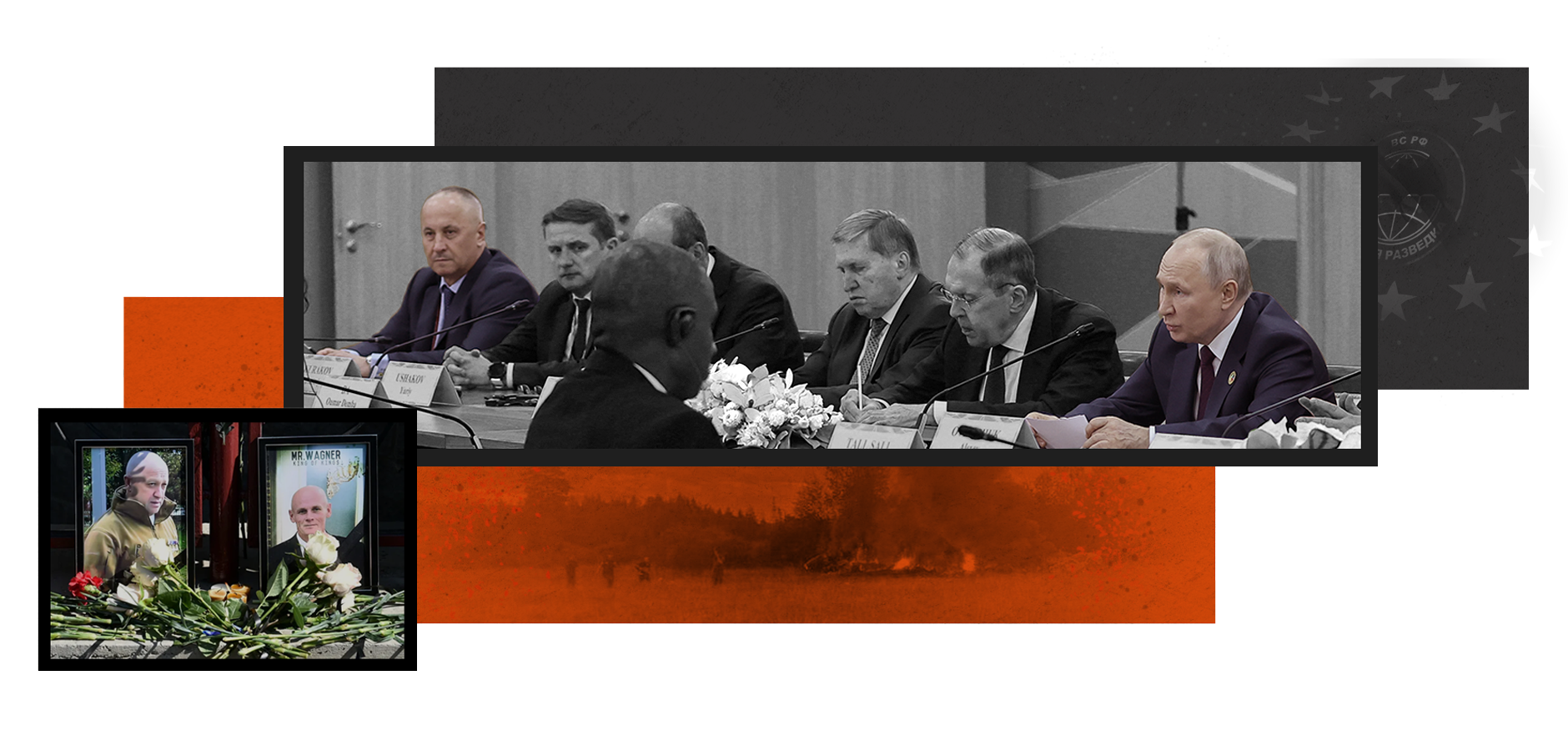
Less than a month later Prigozhin was killed. Having taken off on one of Wagner’s private jets following a meeting at the Kremlin, Prigozhin along with Utkin and much of the group’s leadership were eliminated in a fiery plane crash— the result of a bomb planted during pre-flight checks.
Of Prigozhin’s demise, Jack Margolin, an expert on Wagner wrote “We can be nearly certain that Putin himself ordered Prigozhin’s assassination”.
The murder of a key factional player in Putin’s game though represented “a compromise that will challenge him for the rest of his rule— he made good on his public word for justice and reneged on his private word for amnesty”.
Averyanov, elevated by events, now acted as the GRU’s chief of operations. The organisation was granted control over much of Wagner’s ‘expeditionary’ half— the sprawling military and business empire outside of Ukraine which the GRU had once fostered after its own Unit 29155. Wagners mutiny inside Russia had made the Russian State appear incredibly weak in the eyes of the world, but Wagner’s failure marked a high-point for Averyanov. Five years after their bitter setback following Salisbury, now rebuilt and reinforced with the vast military and illicit-business resources left by Prigozhin, the GRU had become stronger ever.
Averyanov himself, not a businessman ‘outsider’ like Prigozhin, but a veteran Intelligence officer like Putin, was now entrusted by the Kremlin to consolidate and accelerate Russia’s war in the shadows.
— The renewed attacks since the start of 2024 are so wide-ranging that hardly any county in Europe has escaped un-targeted. Serious arson attacks continue to hit logistical facilities used to aid Ukraine across the continent. In November, Lithuanian authorities accused the GRU of conducting a plot to bomb transatlantic cargo flights — packages had burst into flames at warehouses in Birmingham and Leipzig. In that instance a German Intelligence chief warned that an air crash had been averted only thanks to a fortunate flight delay. Later in November a DHL flight crashed while landing in Lithuania, that incident is still being investigated.
Where the GRU’s own ‘illegals’ have come under increasing scrutiny, 29155 has conducted a massive campaign to recruit young people and criminals using encrypted messaging apps, soliciting them with payments to carry out attacks in Europe on its behalf— a vector of attack that security services are struggling to combat.
In perhaps one of the most significant escalations yet, German authorities announced in August that they had foiled a 29155 plot to assassinate the CEO of Germany’s Rheinmetall arms manufacturer— the company has become a major supplier to Ukraine’s war effort. Russian security expert Mark Galeotti said “if that is the thinking we now see in the Kremlin unfortunately we can expect to see some other outspoken and significant figures, who have been particularly important in putting thorns into Moscow side, perhaps considered to be in the crosshairs in 2025”.
At the start of a new year, Ukraine is on the back foot in its fight against Russian invasion. Whatever position Donald Trump ultimately takes, his incoming presidency in the United States will be of enormous consequence to Ukraine.
But as the vastly strengthened GRU continues its renewed shadow-war in Europe, the likelihood of Russia’s expansionist campaign continuing regardless of the war’s outcome only grows.
Should the new Trump administration refuse to offer up the capitulation Russia continues to fight for, escalation is certain to follow— though it is not nuclear escalation or a direct clash with NATO that the West should expect, but a widened war conducted by a ruthless GRU, reinforced by it’s vast Wagner acquisition.
“If things go, from Moscow’s point of view, catastrophically badly, if Putin manages to alienate Trump, and we see increased US support for Ukraine, which is not impossible” Galeotti asked “are we going to see this campaign stretch to the United States? …that could really escalate things quite, quite badly”.
As Russia’s campaign continues, the spectre of Prigozhin will continue to haunt the Kremlin. The close confidant of Putin had negotiated a settlement to end his march on Moscow and had received promises of a return to the fold– yet Putin still chose to violently eliminate the Wagner leader.
As talk of negotiations continue, Ukrainian President Zelensky offered a solemn reminder “ask Prigozhin if one bets on Putin’s promises”.
—
Writing, graphics and data by Jordan Jones.
Thanks for reading! Subscribe for free to receive new posts and support my work.