

After 53 years, earlier this year humankind returned to the moon. The space-race may have been ahead of its time – driving competing powers to the stars through fierce cold-war competition – but today the industry is rapidly maturing.
A NATO Innovation Fund study found European defence, security, and resilience startups raised a record $8.7bn in 2025 – up 55% on the previous year.
The collapse of vaunted British space launch company Orbex in February 2026 demonstrated how brutal the sector can be, but plenty of promising British space startups are quickly filling the space – here are the top five home-grown British space startups worth watching.
1. Space Forge (Cardiff)
As modern computers push beyond the known limits of advancement, the semiconductors that power them are requiring ever more mind-bending precision.
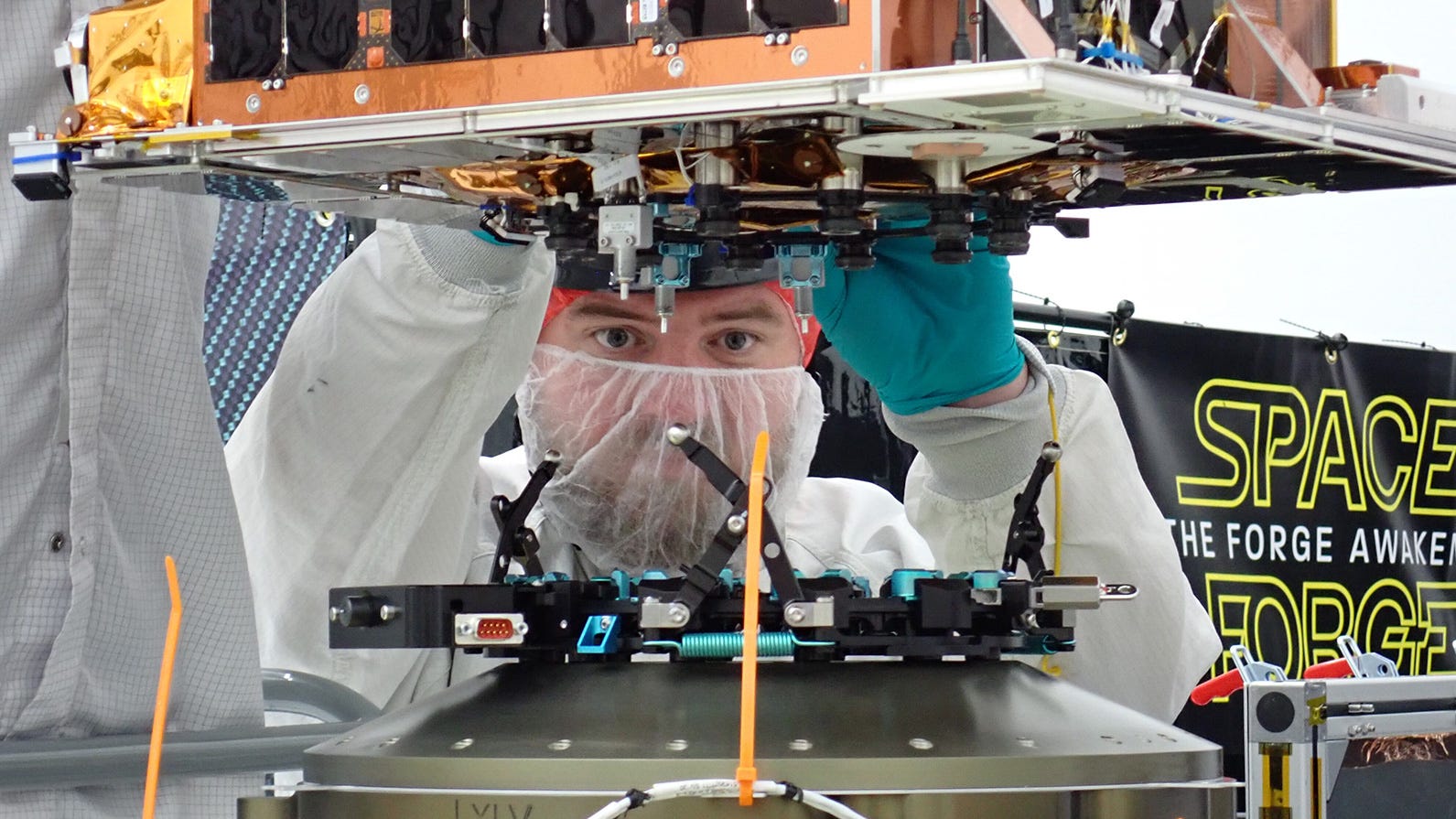
With the Artificial Intelligence boom leading to shortages and competing nations manoeuvring to protect and secure chip supplies, startups like Space Forge are searching for innovative ways to compete.
Probably the UK’s flagship space startup right now, Space Forge is building microwave-sized manufacturing units to produce semiconductors in space, where microgravity unlocks material properties that are impossible to achieve on Earth.
These crystal ‘seeds’, once safely returned to earth, will be worth tens of millions of dollars per kilogram.
After its demonstrator achieved a world-first by generating plasma in orbit at the turn of the year, Space Forge co-founder and CEO Joshua Western said: “Our ForgeStar-1 mission continues to demonstrate what’s possible when the UK’s most innovative engineering and manufacturing expertise comes together.”
2. SatVu (London)

London-based SatVu is bringing entirely new intelligence capabilities to space with its thermal imaging satellites.
Capable of revealing heat signatures day or night, the technology has wide applications including revealing operational activity, monitoring climate or assessing industrial output – providing intelligence that NATO says isn’t available from other commercial sources.
Doubling its total equity funding with a £30m injection which included the NATO Innovation Fund earlier this year, the company is planning a second new satellite launch in 2026, en route to a goal of more than ten satellites in constellation.
With customers like the US National Reconnaissance Office recently adding the company to its testing pool and SatVu launching its commercial operations through its ‘HotSat-2’, CEO Anthony Baker said: “[This] is the point in time when customers are no longer evaluating thermal data as an emerging technology - they are integrating it into operational workflows that support strategic decision making.”
3. Pulsar Fusion (Bletchley)
As humankind draws ever closer to the glittering goal of expansion across the solar system, the vast distances remain a stubborn challenge for future transit to a potential Mars colony.
Bletchley-headquartered Pulsar Fusion is working hard to shrink our solar neighbourhood in the same way air-travel shrank the earth a century ago – only this time, using ‘fusion propulsion’.
Successfully achieving ‘first plasma’ in its Sunbird exhaust test system at its Bletchley HQ earlier in March, the company plans to eventually produce a nuclear-fusion driven engine, with the resulting superheated-plasma directed by powerful magnets to create a blisteringly fast exhaust that could produce speeds of roughly 800,000kmh – potentially reducing transit times to Mars from months to weeks.
An in-orbit demonstration is targeted for 2027, and Pulsar Fusion is working closely with the UK Atomic Energy Authority on neutron-shielding. With the company rapidly scaling up, it may be British ‘space-tugboats’ pushing humanity to Mars in the not-so-distant future.
4. Skyrora (Glasgow/Edinburgh)
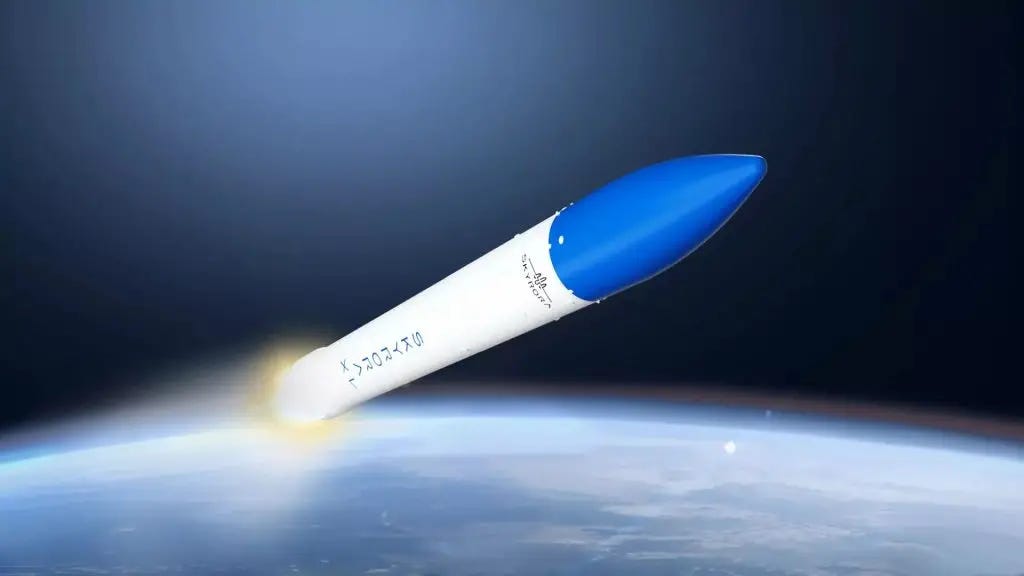
Now Britain’s leading sovereign rocket launch hope following the collapse of its rival Orbex earlier this year, Skyrora has secured launch licenses from the Civil Aviation Authority for 16 sub-orbital launches from SaxaVord Spaceport in Shetland, and the company is targeting orbital launches for late 2026 or early 2027.
The company has been exploring purchases of select assets from defunct competitor Orbex, including the Sutherland Spaceport, giving renewed hope for the country’s burgeoning space-launch industry.
The company said: “Skyrora believes that securing select assets is vital to preserving UK space capability, protecting national critical infrastructure, and ensuring that technology and IP developed in the UK remains under UK ownership.”
5. NewOrbit Space (Reading)
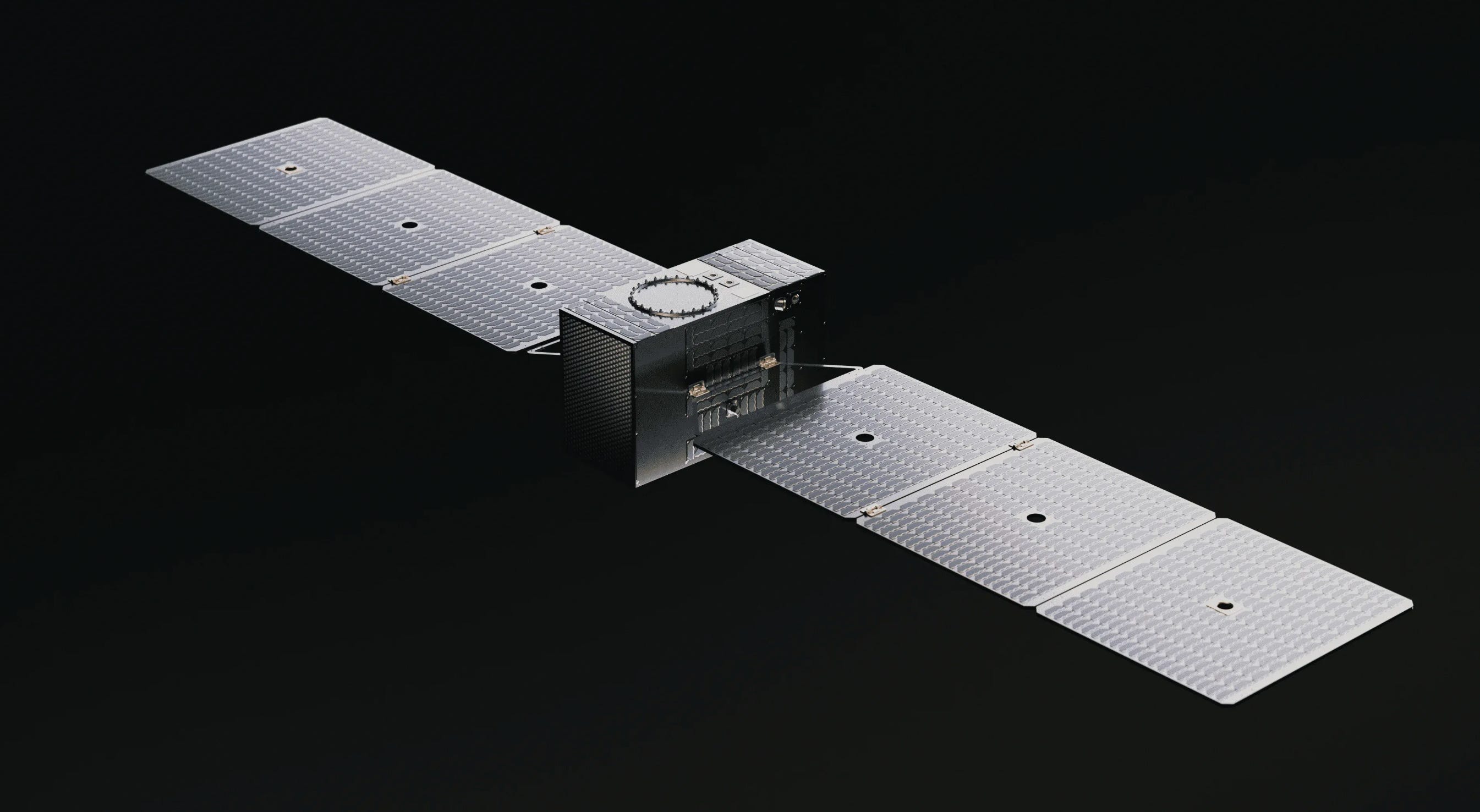
Perhaps the fastest-riser among British space innovators, NewOrbit is hoping to compete in the ‘very low earth orbit’ (VLEO) satellite space, an as-yet largely unexplored commercial field in the sector.
With its satellites capable of overcoming the challenges of lower-orbit like aerodynamic drag, NewOrbit Space promises capabilities including drone-quality imagery from orbit for 20x lower cost than lower-resolution competitors, and 5G connectivity directly to mobile phones.
Following a new $18.5m (£13.7m) funding round in June, the company’s CEO and co-founder Anatolii Papulov said: “For sixty years, VLEO has been treated as too hostile for commercial satellites. It is in fact the most valuable empty real estate in space.”
The company is hoping to open its planned NEO Production Complex in 2027, scaling up from ten satellites per year to several per week, which it says would make it Europe’s largest dedicated VLEO facility. Its first commercial launches are planned for 2028.